You're probably familiar with the Opening and Coupled points of the Eight Extraordinary Vessels.
For example you might use LU-7 (Lieque) to open the Ren Mai and treat reproductive issues. Or you might use SP-4 (Gongsun) to open the Chong Mai and calm rebellious qi.
But did you know that this set of points has other uses as well?
Turns out there's more to these eight points than just the Extraordinary Vessels...
The Ode of the Obstructed River
The point pairs that we're all familiar with to open the Eight Extraordinary Vessels were laid out in the Great Compendium of Acupuncture and Moxibustion.
But there's another classic, the Ode of the Obstructed River, that discusses different uses of these eight points.
This comes from a passage in that book titled "The Eight Therapeutic Methods", which talks about how the eight opening (or "confluent") points affect specific symptoms and areas of the body. Some of them are unexpected, and they're not necessarily related to the Eight Extraordinary Vessels...

LU-7 (Lieque) for disorders of the head region, rebellion and blockage of phlegm and dry throat.
Using LU-7 for dry throat makes sense since the Lung channel ascends to the throat. But using it for disorders of the head is curious because the channel doesn't actually go to the head. We can maybe explain this because LU-7 is the Luo-Connecting point, and its yin-yang pair the Large Intestine channel does go to the head.
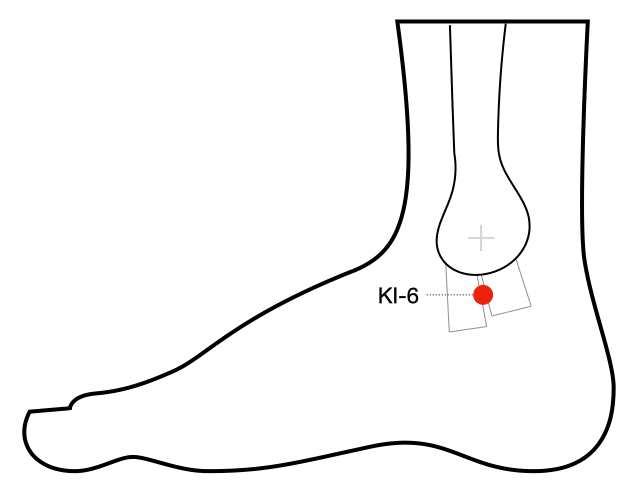
KI-6 (Zhaohai) for throat wind (swelling and pain of the throat).
This one makes sense because the Kidney channel has an internal pathway that goes to the throat (and connects to the root of the tongue). Because KI-6 also nourishes yin, it's commonly used for dry throat.

PC-6 (Neiguan) for disorders of the chest.
PC-6 is famous for nausea, but its effect on the chest also makes sense. For one thing, the Pericardium Channel originates in the chest (and the divergent channel enters the chest and the sinew channel disperses over the chest). But for another thing, PC-6 is the opening point of the Yin Wei Mai which ascends through the chest. The Nan Jing says, "When the Yin Wei Mai is diseased, Heart pain will result."
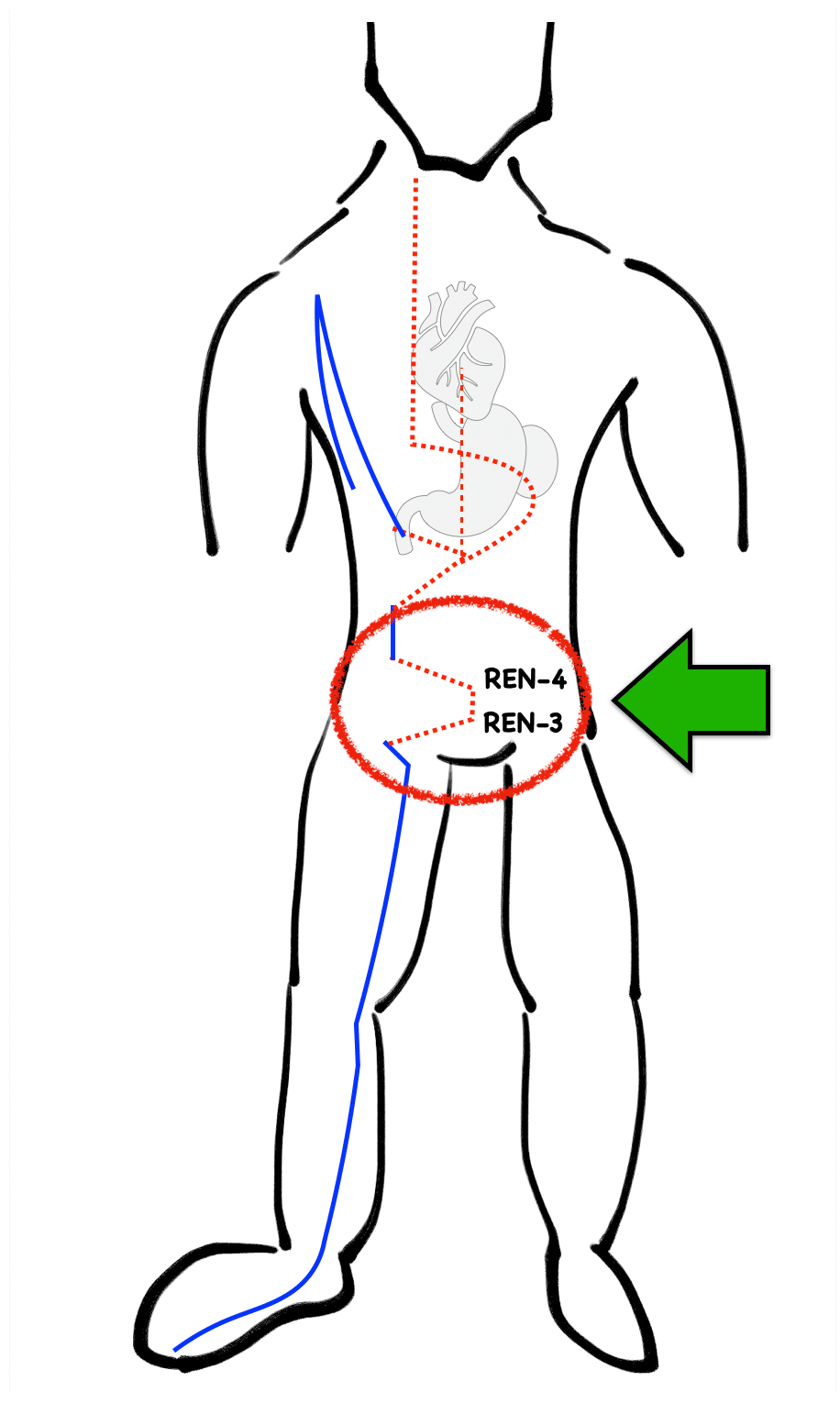
SP-4 (Gongsun) for abdominal pain below the umbilicus.
SP-4 is typically used for rebellious qi, both because it is the Luo-Connecting point and because it opens the Chong Mai. But it's true that the Spleen channel goes to the lower abdomen (connecting to REN-3 and REN-4), so it makes sense that it can treat pain below the umbilicus.
SI-3 (Houxi) for diseases of the Du Mai and for mania-depression.
It's pretty obvious that the opening point of the Du Mai would treat diseases of the Du Mai. Enough said.

BL-62 (Shenmai) to expel cold and heat and treat one-sided headache and generalised head-wind and fright.
We usually think of one-sided headache as being a LV/GB issue, but it's true that the Yang Qiao Mai goes to the side of the head.
SJ-5 (Waiguan) for injury by cold to the exterior accompanied by headache.
This one is interesting because if you follow Maciocia, he says that SJ-5 is the main point for wind-heat. But here we have a classic saying it can be used for exterior cold as well.
GB-41 (Zulinqi) for disorders of the eye.
GB-41 opens the Dai Mai, so we typically think of it as treating issues of the genitals, waist, and hips. But the name of GB-41 is "Foot Governor of Tears", referring to its ability to treat disorders of the eye, such as dry eyes, redness, swelling or pain of the eyes, or lacrimation.
The Ode of the Obstructed River doesn't get much attention in school, but it reframes points you already know in genuinely useful ways.
Did any of these surprise you?